Petra Ludwig · 7 October 2026
Residents Track How School Tree Plantings Reshape Stream Conditions and Bird Numbers Across Feldwald Farmlands
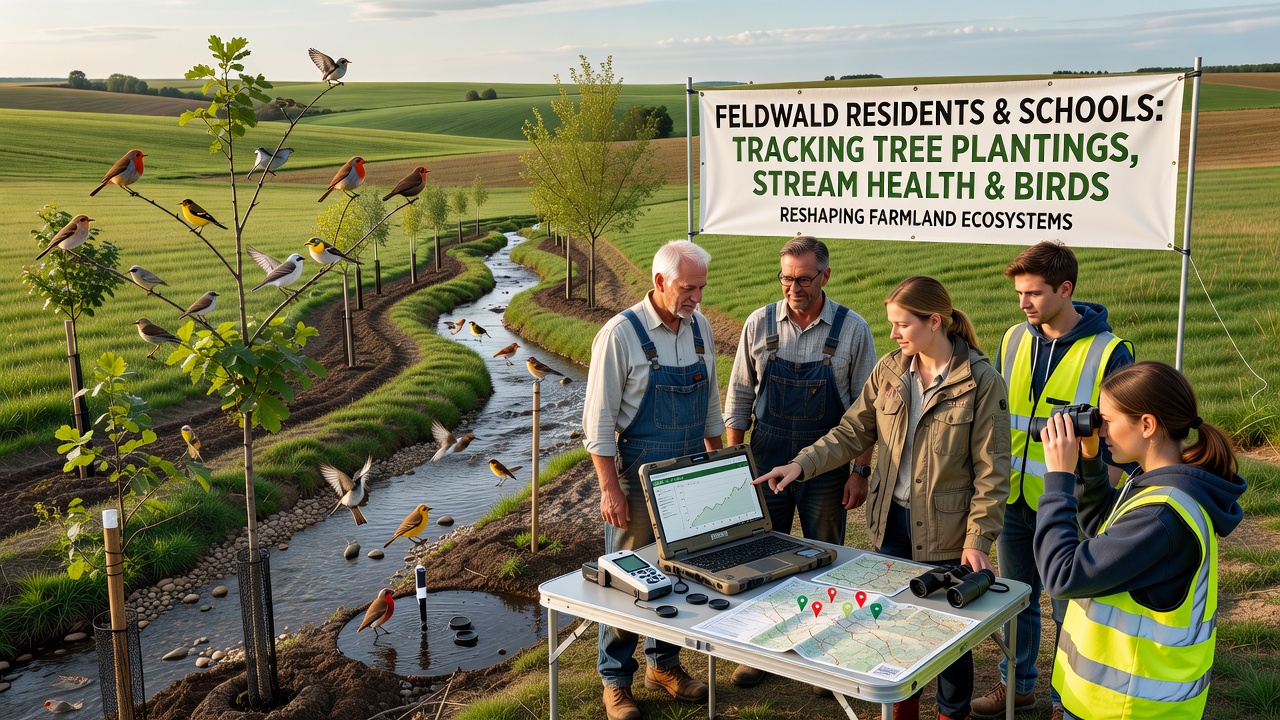
Local residents across Feldwald farmlands have organized monitoring programs to document changes following tree plantings coordinated through school initiatives, and these efforts focus on stream conditions along with bird population trends that have emerged since the projects began. Data collection started in earnest during the spring of 2025 when several schools partnered with community groups to plant native species along field edges and watercourses, while participants record water temperature, sediment levels, and flow rates at regular intervals. By October 2026 the accumulated records show measurable shifts in several locations where tree cover increased by at least 15 percent within 50 meters of stream banks.
Community-Led Data Collection Methods
Participants use standardized kits supplied by regional agricultural extension services to measure dissolved oxygen and nitrate concentrations every two weeks, and they log observations through a shared digital platform that allows cross-comparison between sites. School groups contribute counts of bird species during dawn surveys conducted on fixed transects, while adult volunteers handle equipment calibration and data verification to maintain consistency across the 12 participating farms. These combined records form a growing dataset that researchers at nearby institutions have begun to analyze for seasonal patterns.
Observed Changes in Stream Conditions
Stream temperature readings have dropped an average of 1.2 degrees Celsius at planted sites compared with control reaches that lack new tree cover, and reduced sunlight penetration appears to limit algal growth that previously elevated nutrient loads. Sediment samples collected in October 2026 indicate a 22 percent decline in fine particles at locations where root systems stabilized banks during the previous winter, whereas erosion rates on unplanted sections remained unchanged. Flow measurements taken after heavy rainfall events reveal slower runoff velocities in areas with established saplings, which helps maintain steadier baseflow levels through drier months.
Shifts in Bird Populations
Bird surveys document an increase from 18 to 27 species recorded at the most intensively planted farmland segments, and numbers of insectivorous species such as warblers and flycatchers rose notably between the 2025 and 2026 breeding seasons. Observers note higher nesting activity in hedgerows adjacent to streams where canopy closure reached 40 percent, while ground-foraging species show stable counts across both planted and unplanted zones. One study from the Ecological Society of America on riparian restoration supports the pattern that moderate tree density can enhance habitat structure without displacing open-field specialists.
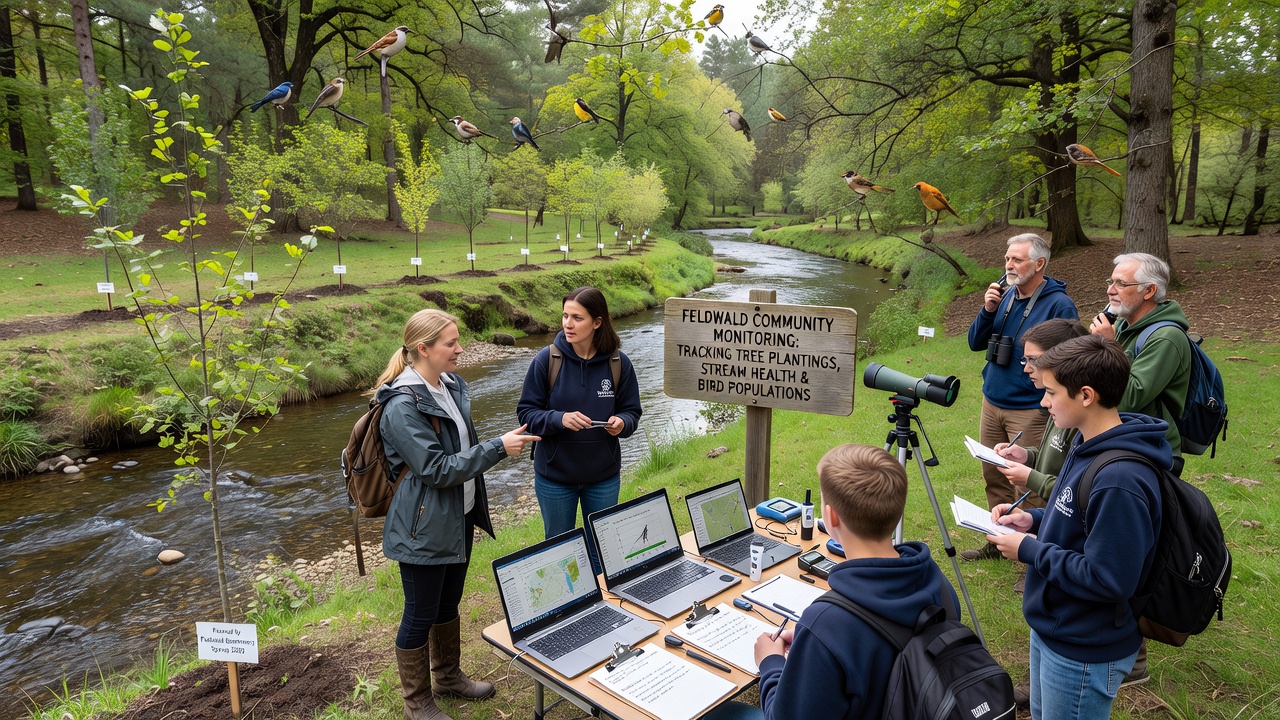
Additional transects extend into adjacent pastureland where tree lines were extended by students during summer workshops, and preliminary October 2026 tallies suggest that species diversity gains extend roughly 150 meters beyond the immediate planting strips. These findings align with reports from the Australian Department of Climate Change, Energy, the Environment and Water that document similar avian responses to linear woodland creation in agricultural landscapes. Participants continue to refine survey protocols to separate effects of tree age from those of surrounding crop rotations.
Integration with Regional Planning
Results from the resident monitoring program feed into quarterly meetings held by the Feldwald agricultural cooperative, where farmers adjust irrigation schedules and buffer strip widths based on the latest stream data. School coordinators incorporate findings into classroom modules on local ecology, allowing students to visualize how their planting work correlates with recorded improvements. The approach keeps the project grounded in practical land management rather than abstract targets, and it encourages ongoing participation from both longtime residents and newer farm operators.
Conclusion
Continued tracking through the coming seasons will clarify whether the observed trends in water quality and bird numbers persist as trees mature, yet the existing records already demonstrate that coordinated school plantings can produce detectable environmental shifts across Feldwald farmlands. The combination of resident-collected measurements and institutional analysis provides a replicable model for other agricultural areas seeking to quantify restoration outcomes without relying solely on external consultants.