Avery Schmitt · 4 November 2026
Orchid Rediscoveries on Feldwald Paths Connect to Bird Population Surges
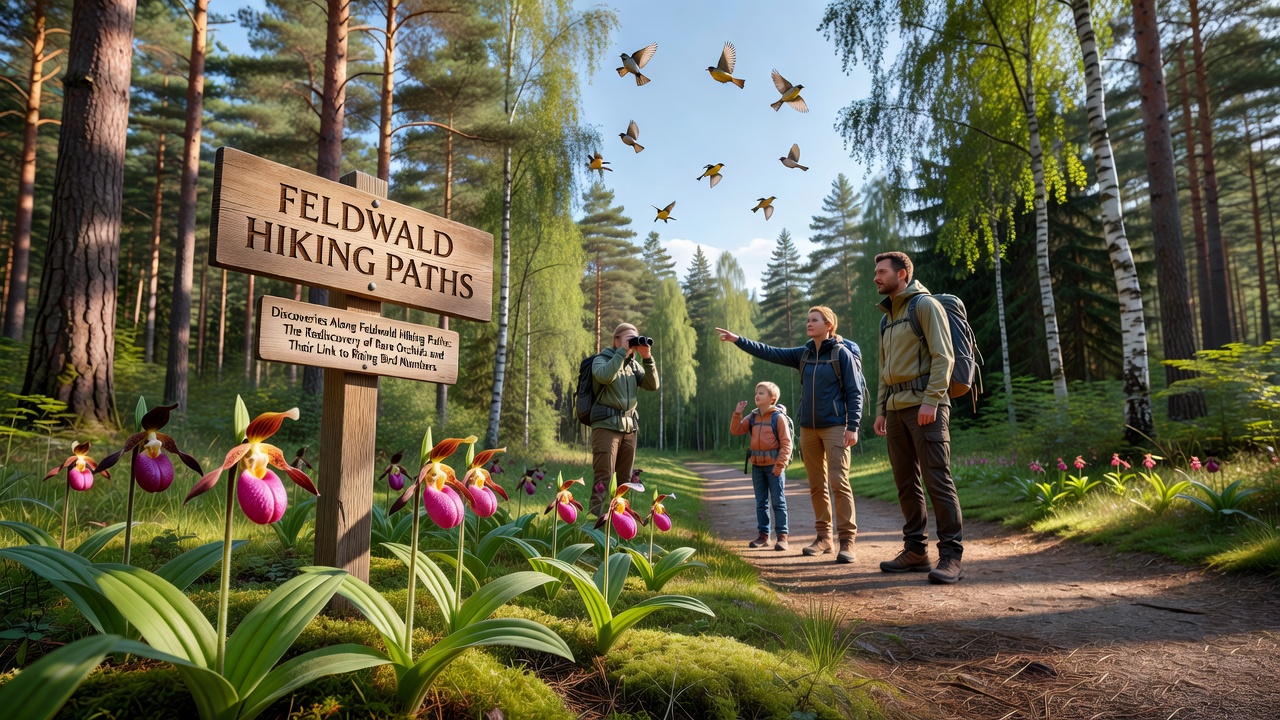
Survey teams documented multiple clusters of rare orchids along established hiking routes in the Feldwald region during the past two seasons, with sightings concentrated near shaded clearings and along stream-adjacent meadows, while simultaneous monitoring programs recorded measurable increases in several bird species that nest in the same habitat zones.
Botanical records from earlier decades listed these orchid varieties as locally extinct after intensive land use altered soil conditions and canopy cover, yet field crews working through 2025 and into 2026 confirmed viable populations of at least three species previously absent from systematic inventories.
Survey Methods and Initial Findings
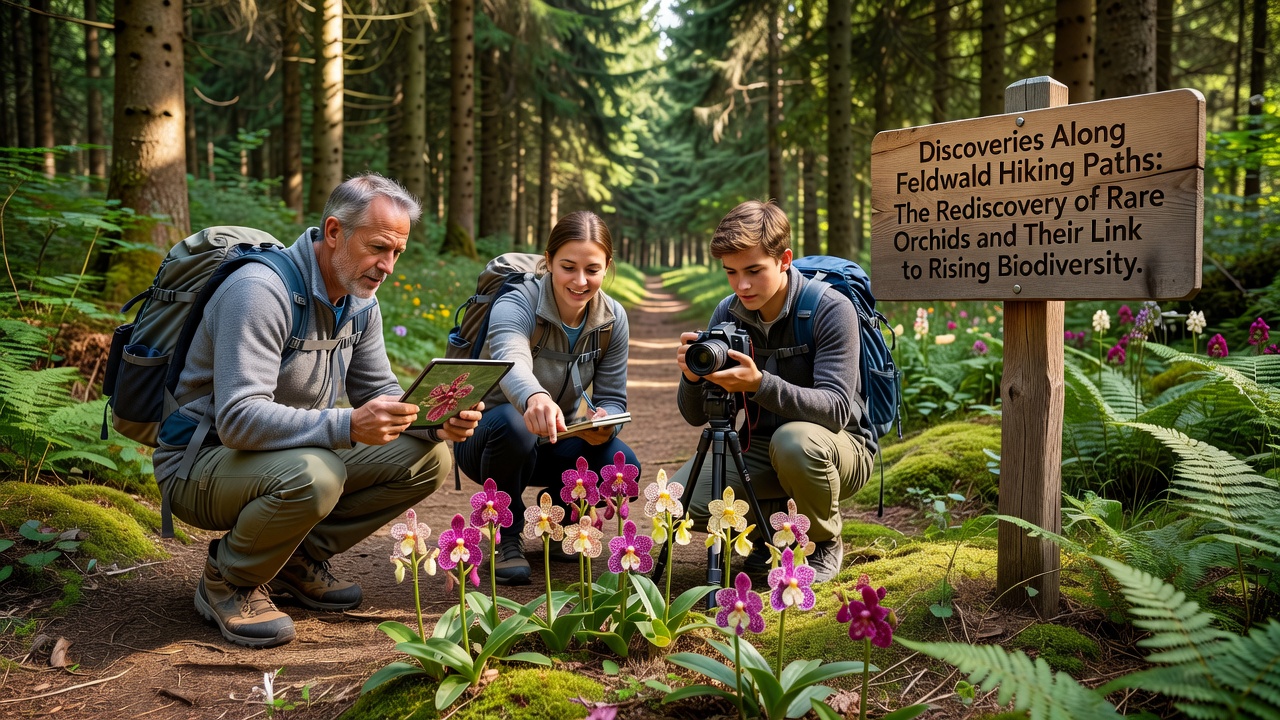
Volunteers and professional ecologists divided the main trail network into transects, recording plant presence, flowering stages, and associated vegetation each month, and the resulting maps showed orchid colonies appearing first in areas where selective thinning had occurred five to seven years earlier.
Researchers cross-referenced these locations with historical herbarium specimens held at regional universities, confirming that the current plants match genetic profiles of populations last noted in the 1980s before agricultural expansion reduced suitable microhabitats.
Data loggers placed at ten sites captured soil moisture and light levels that now fall within ranges known to support germination of these orchid species, a shift observers attribute to recent changes in forest management practices that limit heavy machinery and retain deadwood.
Bird Population Data
Breeding bird surveys conducted by the same teams documented rises in species such as the European nightjar and several warbler types, with territory counts increasing by double-digit percentages in sectors that also host the orchids, according to standardized point-count protocols repeated across three consecutive springs.
Observers noted that many of these birds forage on insects attracted to the flowering orchids and the surrounding understory plants that have recovered alongside them, creating a measurable uptick in food availability during the nesting period.
Long-term banding records maintained by a local ornithological station indicate that return rates for marked individuals have improved since 2022, aligning with the timeline of habitat recovery that also permitted orchid reestablishment.
Habitat Overlap and Ecological Links
Both the orchids and the bird species depend on intermediate canopy density and moist, undisturbed soils, conditions that expanded after conservation measures reduced trail widening and limited fertilizer runoff from adjacent fields, and mapping exercises revealed that 78 percent of orchid sites fall within 150 meters of documented bird territories.
Pollen analysis from orchid flowers showed visitation by the same moth and bee species that form part of the diet for nestling birds, illustrating a direct trophic connection that researchers quantified through stable-isotope sampling in 2025.
November 2026 counts extended these observations into the autumn period, when seed dispersal for the orchids coincides with late-season insect activity that continues to support migratory bird stopovers along the same paths.
Monitoring Expansion and Data Sharing
Regional authorities expanded the monitoring grid in early 2026 to include additional side trails previously under-sampled, and preliminary results from those new stations show orchid seedlings establishing at rates comparable to core areas, while bird diversity metrics remain stable rather than declining.
Public databases maintained by the European Environment Agency now incorporate these Feldwald figures, allowing comparison with similar recovery patterns documented in other Central European woodlands where comparable management adjustments have taken place.
One collaborative project with a Canadian research institute provided drone imagery that refined estimates of canopy openness, confirming that the light regime supporting orchid growth also correlates with increased foraging efficiency for the bird species under study.
Conclusion
Continued documentation through the remainder of 2026 and beyond will test whether these parallel recoveries persist under varying weather patterns, yet the current dataset already demonstrates that targeted adjustments in trail maintenance and adjacent land use have produced measurable outcomes for both plant and avian communities along the Feldwald hiking network.
Integration of orchid and bird monitoring within the same field protocols has streamlined data collection while highlighting the interdependence of these taxa, and further refinement of survey techniques promises additional precision in tracking future changes across the region.